


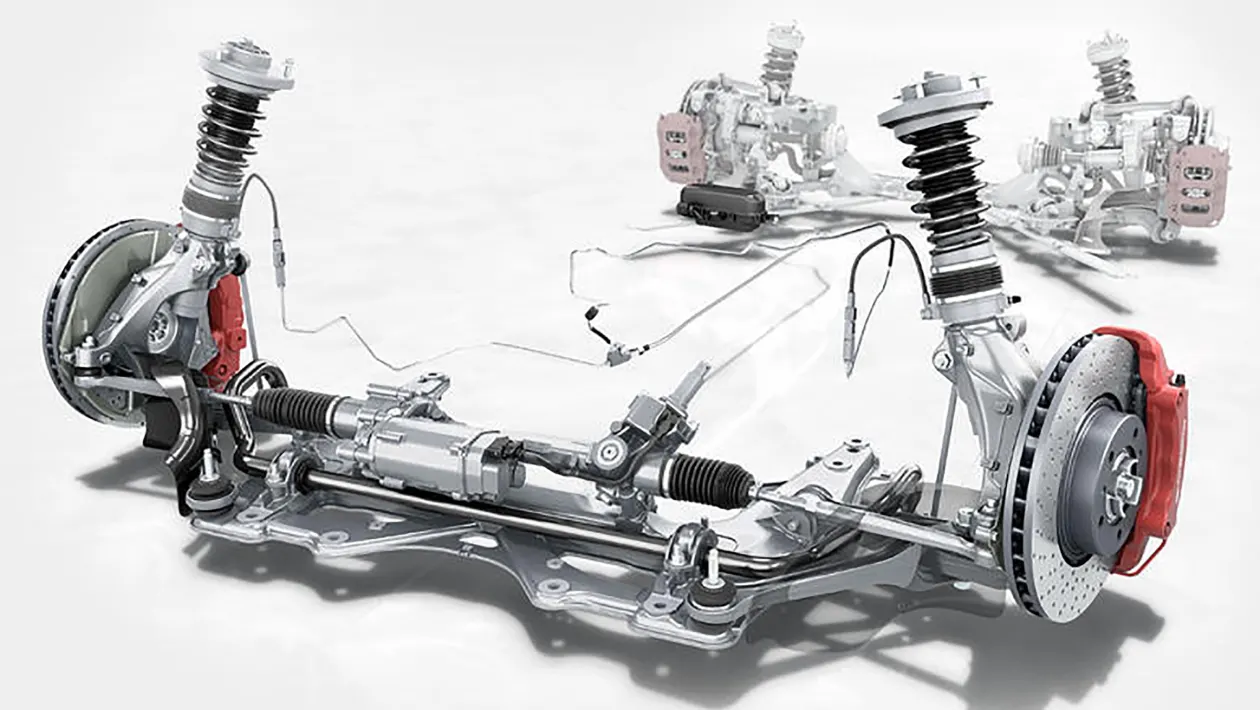
High‑performance vehicles are engineered for precision and agility. Their wheels and suspension systems are critical to delivering the handling characteristics that enthusiasts crave and that safety demands. After a collision or even routine wear, aligning and balancing these components is essential to maintaining performance. Understanding what alignment and balancing involve, how they differ and why they matter illuminates how careful attention to these systems supports the driving experience.
Wheel alignment refers to the adjustment of the angles of the wheels relative to the vehicle and the road. These angles—camber, caster and toe—affect how the tyres contact the road surface. Camber is the tilt of the wheel inward or outward when viewed from the front. Positive camber means the top of the wheel leans out, while negative camber means it leans in. Caster is the tilt of the steering axis when viewed from the side, influencing steering feel and stability. Toe is the direction in which the wheels point relative to each other, whether they point inward (toe‑in) or outward (toe‑out). In high‑performance vehicles, alignment settings are often more aggressive, with negative camber for better cornering grip and specific toe settings for stability at speed.
After a collision, suspension components may be bent or misaligned. Even hitting a pothole or curb can alter alignment. Misalignment leads to uneven tyre wear, pulling to one side and reduced handling precision. Technicians use alignment machines equipped with laser or camera systems to measure wheel angles relative to the vehicle’s specifications. Adjustments are made by altering control arms, tie rods or strut mounts until the readings match the manufacturer’s targets. Because high‑performance vehicles often have adjustable suspension components, alignment settings can be fine‑tuned for different driving conditions, such as track days or everyday driving.
Wheel balancing addresses the distribution of weight around the wheel and tyre assembly. Even small imbalances can cause vibration at certain speeds, leading to driver discomfort and potential wear on suspension components. Balancing machines spin the wheel and tyre assembly to identify heavy spots. Weights are then added to the wheel rim to counteract these imbalances. In high‑performance applications, both static (vertical) and dynamic (lateral) balancing are performed. Dynamic balancing ensures that the wheel does not wobble side‑to‑side, which can be especially noticeable at high speeds.
Tyre condition influences alignment and balancing. Worn tyres may not hold alignment settings as well, and uneven wear can indicate underlying issues. Technicians inspect tread depth, wear patterns and sidewall condition. They also check tyre pressure, as improper inflation can mimic alignment issues. High‑performance tyres have stiffer sidewalls, which make them more sensitive to alignment and balance changes. Ensuring that tyres are in good condition and properly inflated is part of the alignment and balancing process.
Suspension components themselves require inspection after a collision. Control arms, ball joints, bushings and shock absorbers can be bent or damaged. Worn bushings can allow components to move excessively, altering alignment and causing noise. Shock absorbers and struts control the rebound and compression of the suspension. If they leak or lose damping ability, the vehicle may bounce, lean or dive under braking. High‑performance vehicles may use adjustable coilovers or electronically controlled dampers that require calibration after replacement or repair.
Alignment and balancing are not one‑time tasks. Regular checks are essential, especially for vehicles driven enthusiastically or on rough roads. After track events, suspension settings may need to be adjusted back to street‑friendly specifications. Seasonal tyre changes, such as switching between summer and winter tyres, provide an opportunity to check alignment and balance. Keeping records of alignment settings helps technicians and owners track changes over time and adjust for wear or modifications.
Beyond performance, proper alignment and balancing contribute to safety and efficiency. A vehicle that tracks straight and responds predictably to steering inputs is easier to control in emergency situations. Even tyre wear ensures that tread remains adequate for traction and braking. Reduced vibration improves driver comfort and reduces fatigue on long journeys. Fuel efficiency can also benefit, as misalignment can increase rolling resistance.
For owners of high‑performance vehicles, alignment and balancing are part of maintaining the vehicle’s designed characteristics. Whether the vehicle is a daily driver, a weekend thrill machine or a track‑ready weapon, attention to these fundamentals ensures that it delivers the performance, comfort and safety that the engineers intended. Repair facilities equipped with advanced alignment and balancing equipment, and staffed by technicians who understand the nuances of high‑performance suspension, can help owners achieve the perfect balance for their driving needs.


