First, a quick note on our lane. We repair vehicles, we’re not your insurer or your broker. So take the claims detail below as a starting point and confirm the specifics with your own insurer, because policies differ.
Do these things before you leave the spot
Start with photos, and take more than you think you need. Wide shots showing your car and the surrounding area, then close-ups of the damage with something for scale. If there’s transferred paint from the other vehicle, photograph that too, since it can help identify the car later. Look around for a parking attendant, a nearby business, or a building with cameras pointed at the lot, and ask whether footage exists. A licence plate or a clear camera angle can change the whole claim.
If anyone saw it happen, get a name and number. Then report it. In Ontario, a hit-and-run with no known driver should go to the police, and you can file a report through the Toronto Police reporting process. That report number matters because it’s often what your insurer wants before they’ll process the claim.
How the claim usually works when there’s no other driver
This is the part people get wrong. When another driver hits you and stays, the property damage typically runs through Direct Compensation Property Damage, the part of your Ontario policy that handles damage caused by an identified at-fault driver. When the other driver takes off and can’t be identified, that route often isn’t available, and the claim shifts to a different part of your coverage instead.
That’s why the police report and your photos carry weight. They support the version of events where you were parked and uninvolved. Whether the repair ends up affecting your record or your premium depends on your insurer and the specifics, and that’s a fair question to ask them directly before you decide how to proceed. For smaller damage, it’s also worth weighing the repair cost against your deductible before you open a claim at all.
Why where you take it still matters
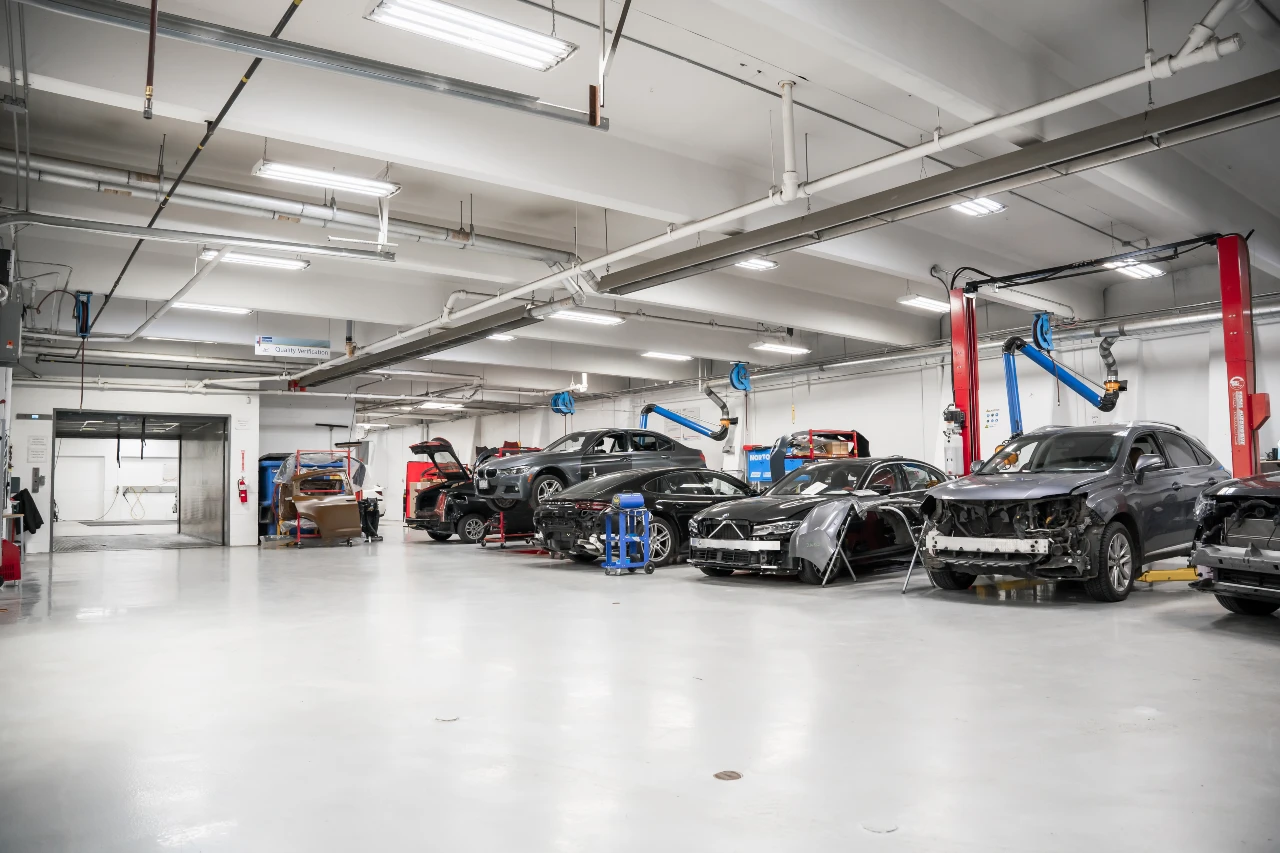
Once the claim path is sorted, the repair itself is straightforward, and you get to choose where it happens. On a luxury or late-model car, that choice matters more than it used to. A door skin, or quarter panel, on a modern vehicle often carries sensors, specific materials, and a factory finish that must be matched exactly. We’re certified for the brands we work on, and our downtown facility is set up to repair these cars to manufacturer standards rather than just making the dent disappear. If you want a sense of what separates a proper shop from a quick fix, our note on how to choose the right repair shop covers it.
So here’s where to land. Photograph everything, look for cameras and witnesses, file the police report, then call your insurer to confirm which coverage applies before you commit to anything. When you’re ready to get the car back to the way it was, book an estimate or get in touch, and we’ll take it from there. A parking-lot hit is annoying, but it’s fixable, and handled in the right order, it doesn’t have to cost you more than it should.
This article is general information, not insurance or legal advice. Coverage and claims handling vary by policy, so confirm the details with your licensed insurer or broker.